
INFRASTRUCTURE PRECEDES AUTONOMY
Your reports disagree. Your cloud bill has no owner. I fix the foundation underneath both.
I build the governed data foundation, business intelligence and enterprise architecture that make data and AI investments perform. For mid-market and PE-backed companies in Healthcare, Oil and Gas, and Finance.
Twenty years of enterprise data leadership at UTMB Health · Kinder Morgan · Thomson Reuters · Neudesic
Three liabilities show up before most organizations realize they have a foundation problem.
Deploying AI onto an ungoverned data estate is a capital drain. You cannot automate an estate you haven't engineered.
01
Runaway compute costs
Unoptimized AI query loops generate cloud invoices nobody can predict or explain.
02
Contradictory metrics
Business units report different numbers because business logic was never defined in one place.
03
Brittle pipelines
AI and reporting pipelines break the moment a legacy schema shifts.
I have built these foundations myself. Now I lead the work and own the outcome.
Relational Foundation Engineering
I fix the data foundation itself, so reporting and analytics stop contradicting each other and cost less to run.
Cloud Cost Ownership and Governance
I make cloud spend predictable by giving it an owner. Cost is the one major line item generated by engineering, paid by finance and accountable to nobody, and I close that gap without sacrificing performance.
Semantic Layer and Metrics Architecture
I establish the single source of truth between raw data and the tools that read it. Business definitions get locked in one place, so every report and every AI output means the same thing.
How I Engage: The Data Foundation Diagnostic
I don't begin with open-ended consulting agreements. Every engagement starts with the Data Foundation Diagnostic, a focused 30-day assessment scored with my Submerged 90 Audit. It maps your liabilities, quantifies cloud waste, and benchmarks your structural readiness for AI. Fixed fee, from $15K.
What you get at the end of 30 days:
Infrastructure Vulnerability Report: A line-by-line breakdown of hidden database inefficiencies and compute-heavy query risks.
Foundation Roadmap: An engineering-first blueprint detailing the exact relational changes required to make your data estate perform.
From there, we define the next step together based on what the diagnostic finds.
After the Diagnostic: Fractional Chief Data Officer
When the Diagnostic shows the foundation needs an owner, I stay on as your Fractional Chief Data Officer, about two days a week. I own data governance, business intelligence and data architecture as the accountable executive, and I report to your CEO or CFO. The Foundation Roadmap becomes my work plan. This fits mid-market and PE-backed companies that don't have a full-time data leader yet. I build the function while I hold the seat, so your eventual full-time hire walks into a team that already works.
FROM MY DOCTORAL RESEARCH
Executive sponsorship and governance as trust predict data ROI better than the technology stack you choose.
FREE BRIEFING
The Submerged 90 Principle
The framework behind the Diagnostic. Why ninety percent of the work that decides data and AI ROI sits below the waterline.
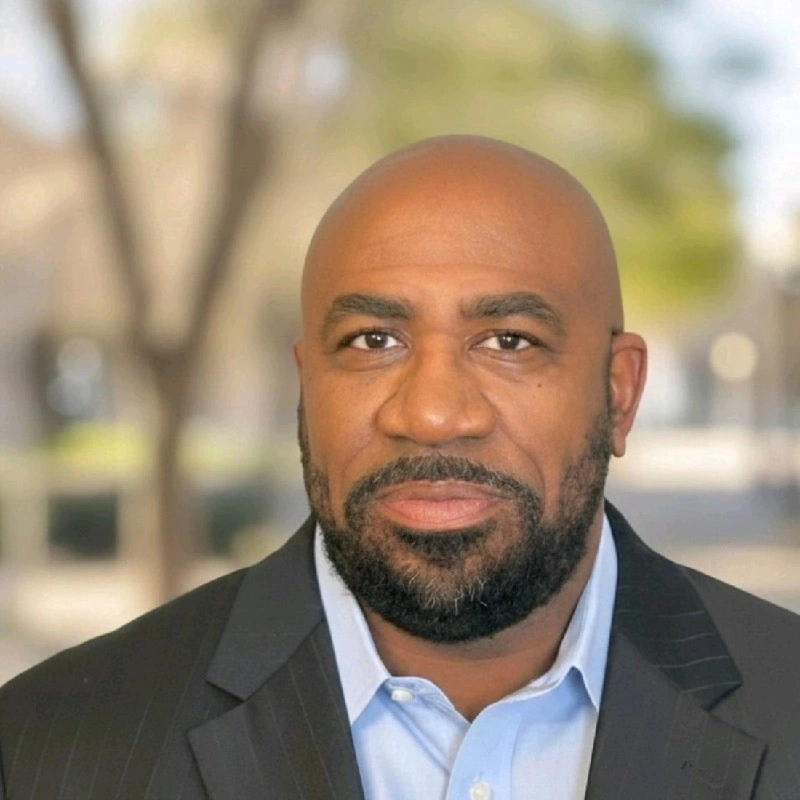
Dr. Malik Al-Amin, DIT
Fractional Chief Data Officer
Data and Analytics Executive | Governance, BI and Data Architecture | Healthcare, Oil and Gas, Finance
I start every data problem at the foundation, because that's where this quarter's AI trend either holds up or falls apart. More than twenty years as a database administrator, dimensional modeler, business intelligence developer and enterprise data director across healthcare, oil and gas and finance taught me where these problems actually live.