
Most BI Implementations Fail
Despite massive investment, BI projects fail to deliver their expected return as often as 80 percent of the time. In my doctoral research I analyzed why, studying the critical success factors that separate the implementations that succeed from the ones that fail. The finding was consistent. This is rarely a technology failure. It is a failure of organizational readiness, and without a governance framework to address it, a cloud migration simply moves technical debt from on-premise to the cloud, raising cost without delivering insight.
THE CLOUD BI ADOPTION FRAMEWORK
Successful Cloud BI is an organizational transformation before it is a software purchase. Based on qualitative inquiry with veteran BI practitioners, I identified six factors that separate the implementations that turn data into advantage from the ones that fail:
Strategic Alignment and Executive Leadership: Moving beyond passive support to executive ownership of the KPIs and the mission.
Project Governance, Planning and Resource Management: Formal demand management and intake structures that prevent scope creep and allocate scarce resources.
Technical Architecture, Engineering and Cloud Platform Execution: Modular, scalable pipelines built on sound architecture rather than ad-hoc cloud builds.
Collaboration, Communication and Stakeholder Partnership: Business stakeholders embedded as co-creators of the solution, not just consumers of it.
Data Quality, Governance and Trust: Stewardship and lineage that make accuracy something the business can rely on.
End-User Engagement, Adoption and Change Management: Engaging end users in the design phase, not just at handover.
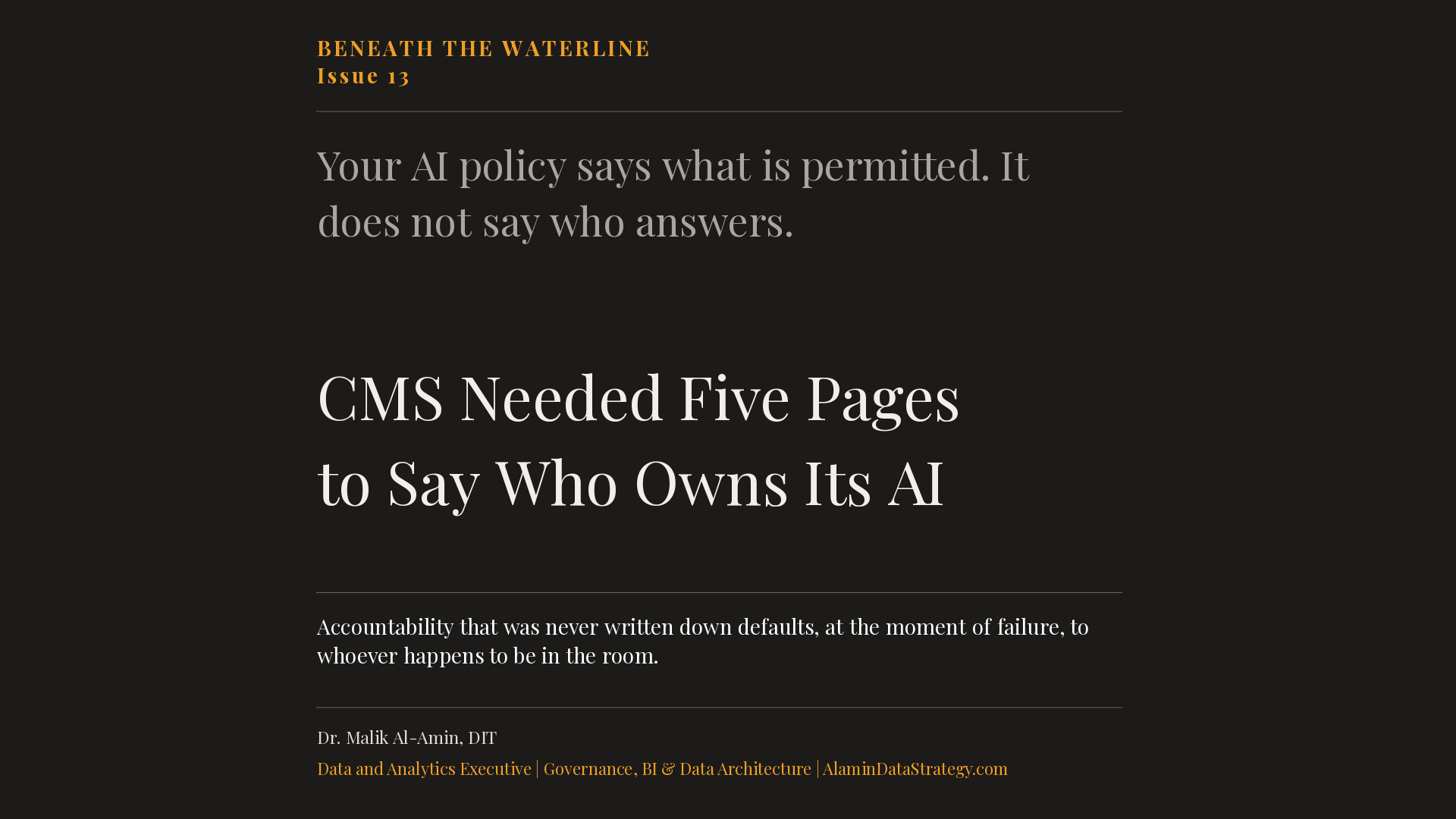
CMS Needed Five Pages to Say Who Owns Its AI
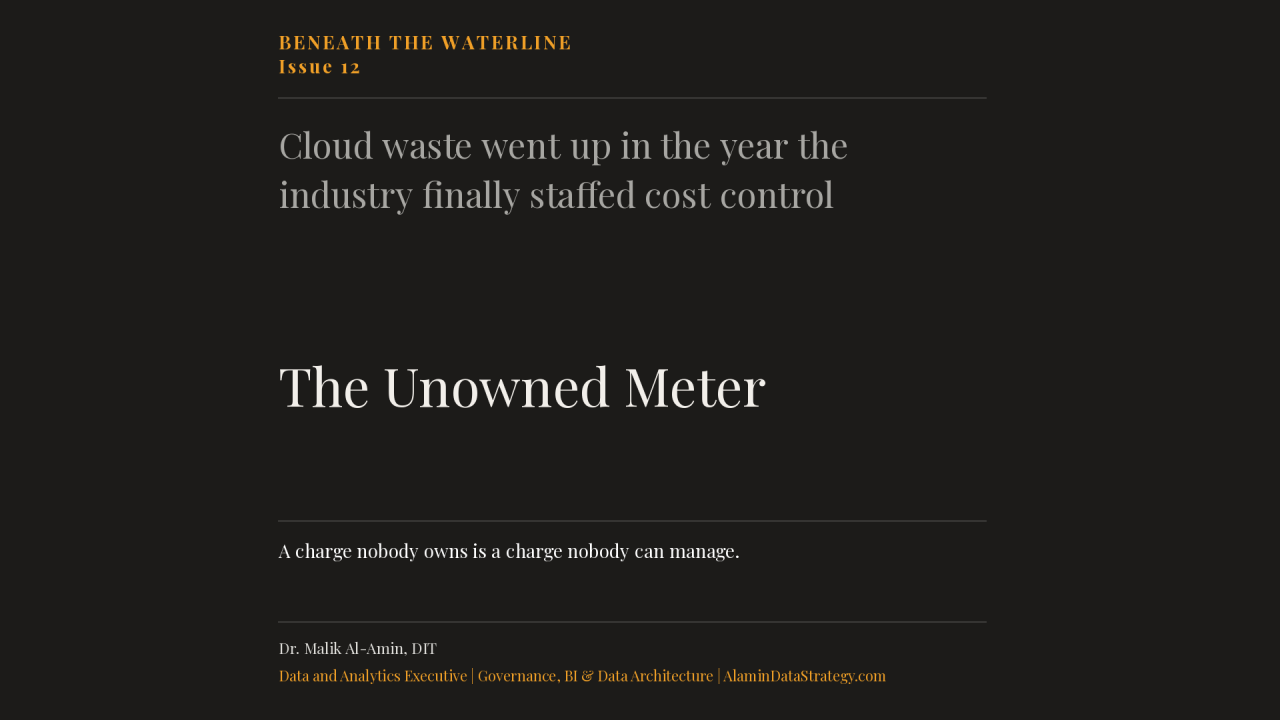
The Unowned Meter
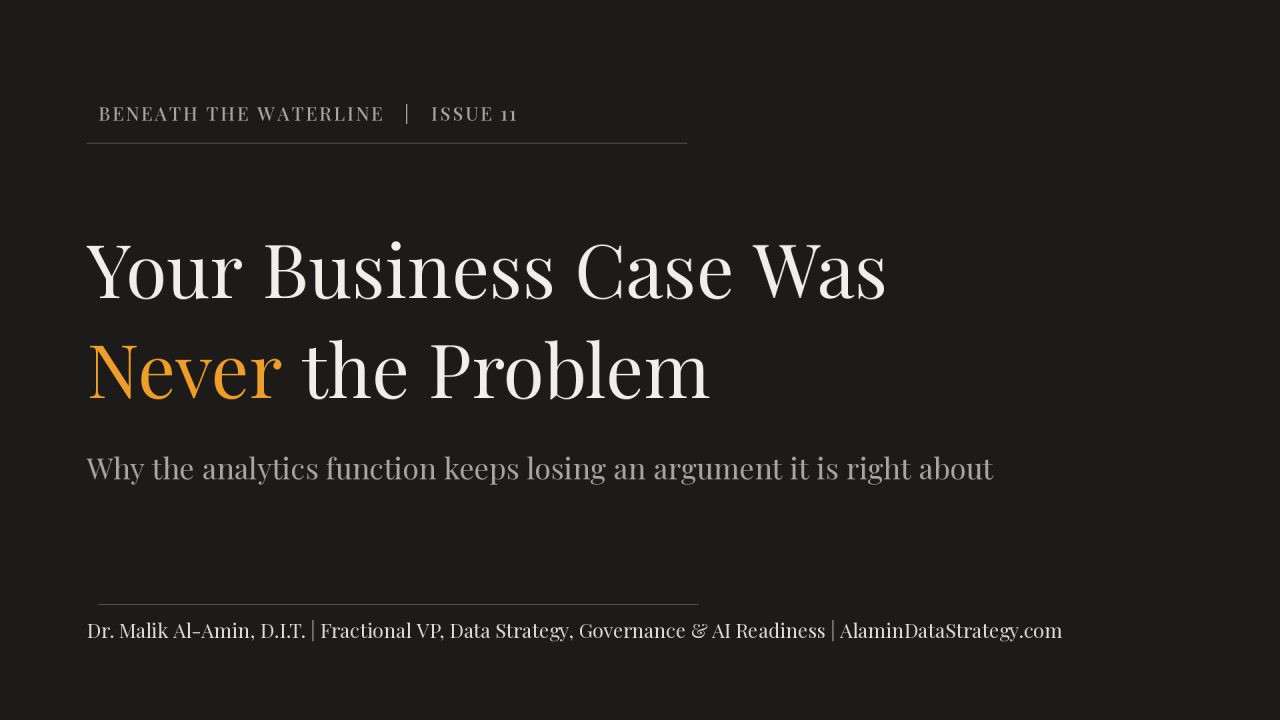
Your Business Case Was Never the Problem

The Ninety Percent Was Never About Technology
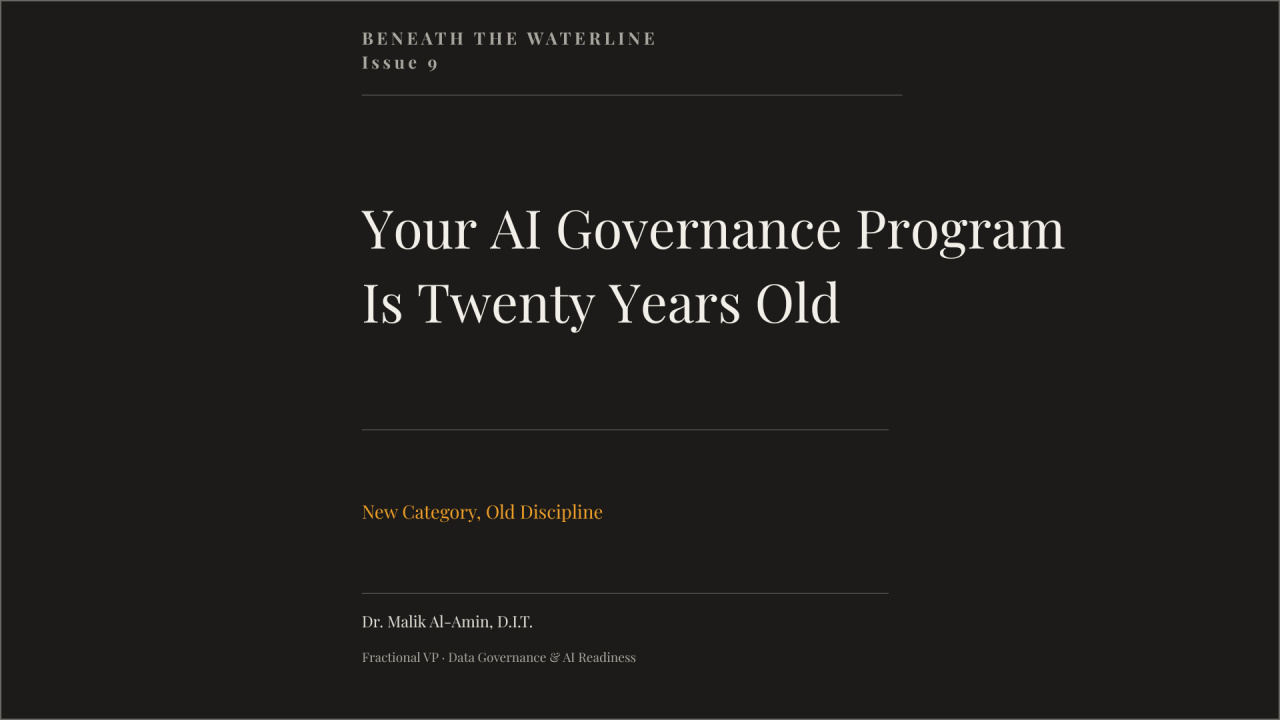
Your AI Governance Program Is Twenty Years Old
The Pipeline That Lied

The Schema Nobody Owns

The Lineage Nobody Is Tracing

The Variable Nobody Priced Into the Data Center Model
The Leadership Debt Nobody Is Counting

The Restraint Economy: Why Big Tech is Turning Off the AI Tap
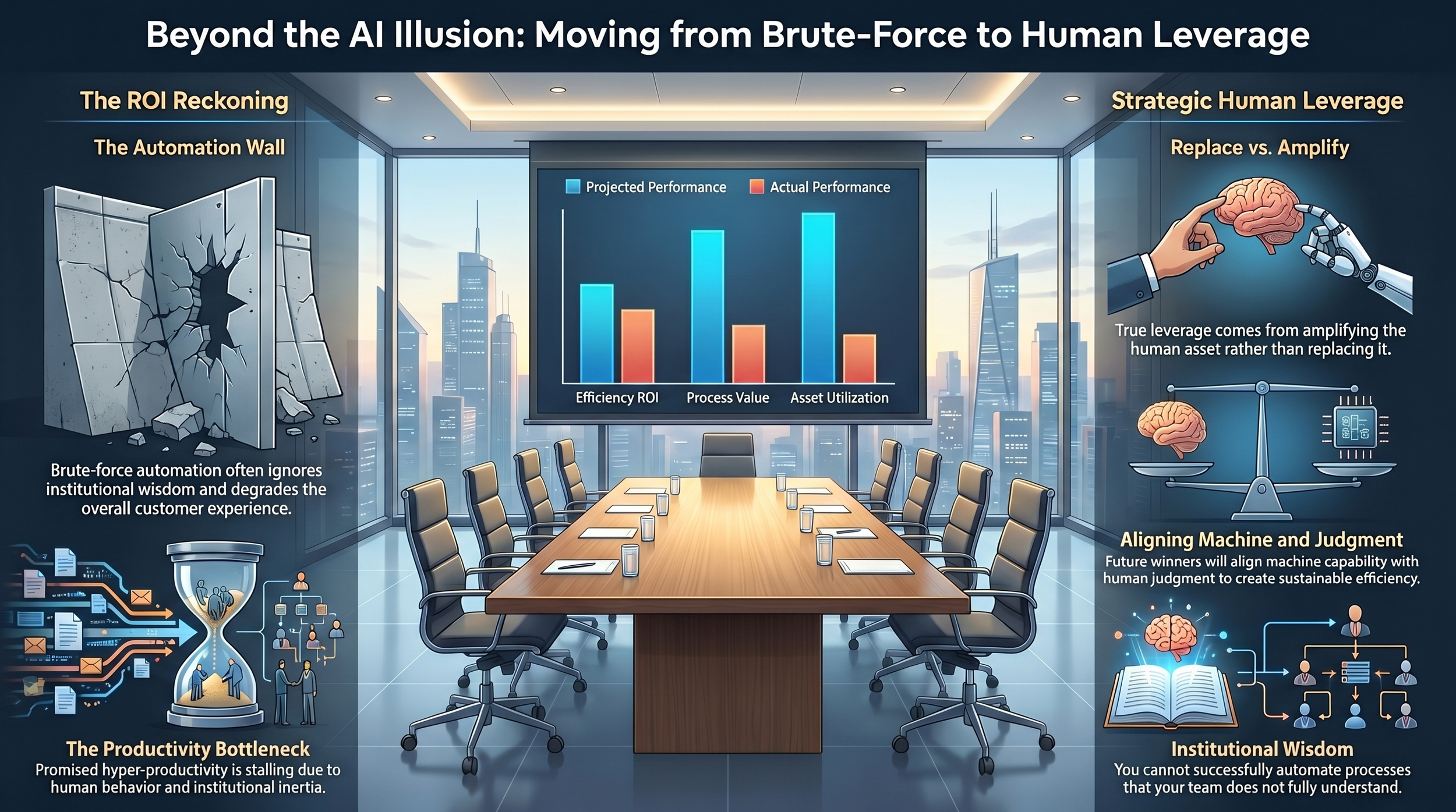
The Illusion of Brute-Force Efficiency
EXECUTIVE STRATEGY | 3 MIN READ

The "Amnesiac Analyst" is currently sitting in your C-Suite.
EXECUTIVE STRATEGY | 3 MIN READ