
The Agent-Ready Data Estate: Solving the "Million-Token Mistake"
The enterprise is currently gripped by a dangerous optical illusion. Executives are being sold the "Interface of Convenience": the chat window, the Copilot, the magic prompt that promises to turn raw data into instant strategy.
But as a scholar-practitioner who has spent years bridging the gap between database rigor and executive outcomes, I see a different reality emerging. We are handing out "corporate credit cards" in the form of API keys to probabilistic engines that are brilliant at reasoning but suffer from total enterprise amnesia.
Without a governed foundation, we aren't building intelligence; we are building 𝗛𝗶𝗴𝗵-𝗩𝗲𝗹𝗼𝗰𝗶𝘁𝘆 𝗛𝗮𝗹𝗹𝘂𝗰𝗶𝗻𝗮𝘁𝗶𝗼𝗻 𝗘𝗻𝗴𝗶𝗻𝗲𝘀. To move from experimental pilots to institutional ROI, we must shift our focus from the "Model" to the Agent-Ready Data Estate.
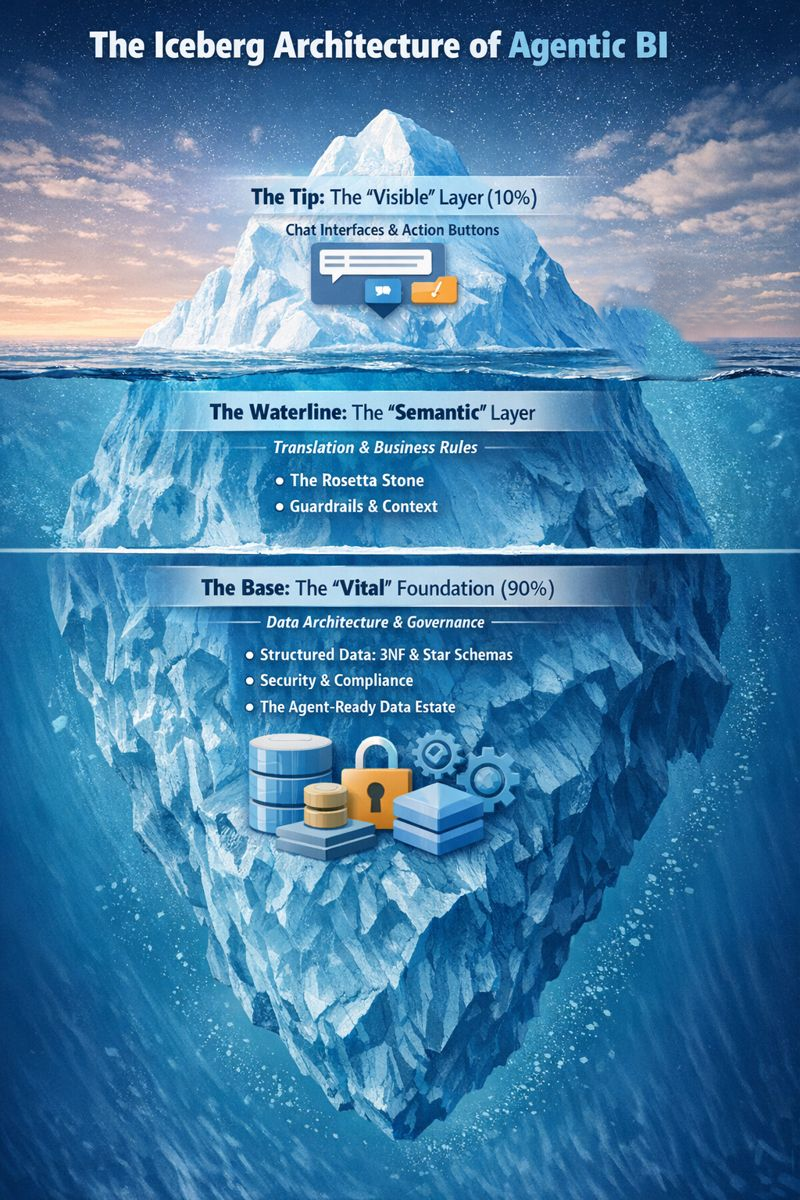
The Iceberg Architecture: 90% of Agentic BI success is submerged in data governance and infrastructure.
𝗧𝗵𝗲 𝗦𝗰𝗵𝗼𝗹𝗮𝗿 𝗩𝗶𝗲𝘄: 𝗧𝗵𝗲 𝗦𝗼𝗰𝗶𝗼-𝗧𝗲𝗰𝗵𝗻𝗶𝗰𝗮𝗹 𝗚𝗮𝗽
In my doctoral research on Business Intelligence maturity, a recurring theme emerged: the Socio-Technical Gap. This is the space between a human's mental model of a business metric and the cold, unyielding reality of the underlying SQL schema.
In traditional BI, this gap was annoying; it resulted in "Metric Contradiction," where the Sales dashboard showed one number, and Finance showed another. In the Agentic era, this gap is fatal. An AI Agent does not have the intuition to "sense" that a table is out of date or that a metric calculation is missing a filter. It will simply proceed with a calculation that is mathematically correct but business-contextually wrong. This is the 𝗠𝗶𝗹𝗹𝗶𝗼𝗻-𝗧𝗼𝗸𝗲𝗻 𝗠𝗶𝘀𝘁𝗮𝗸𝗲: spending massive compute resources to arrive at a perfectly logical, yet entirely incorrect, conclusion.
𝗧𝗵𝗲 𝗣𝗿𝗮𝗰𝘁𝗶𝘁𝗶𝗼𝗻𝗲𝗿 𝗩𝗶𝗲𝘄: 𝗧𝗵𝗲 𝗙𝗿𝗶𝗰𝘁𝗶𝗼𝗻 𝗼𝗳 𝘁𝗵𝗲 "𝗗𝗮𝘁𝗮 𝗦𝘄𝗮𝗺𝗽"
As a leader, I witnessed the "gritty" reality of this gap. We managed many tables where "Patient Status" could be defined in six different ways, depending on which legacy system the data originated from.
If you point a standard Retrieval-Augmented Generation (RAG) system at that "Data Swamp," the results are catastrophic. We found that without a deterministic bridge, the AI would prioritize the most "recent" or "similar" record, regardless of its clinical or financial accuracy. We realized that 𝗜𝗻𝗳𝗿𝗮𝘀𝘁𝗿𝘂𝗰𝘁𝘂𝗿𝗲 𝗽𝗿𝗲𝗰𝗲𝗱𝗲𝘀 𝗔𝗽𝗽𝗹𝗶𝗰𝗮𝘁𝗶𝗼𝗻. If the "plumbing" is dirty, the "policy" will fail.
𝗧𝗵𝗲 𝗧𝗵𝗿𝗲𝗲 𝗣𝗶𝗹𝗹𝗮𝗿𝘀 𝗼𝗳 𝘁𝗵𝗲 𝗔𝗴𝗲𝗻𝘁-𝗥𝗲𝗮𝗱𝘆 𝗗𝗮𝘁𝗮 𝗘𝘀𝘁𝗮𝘁𝗲
To build a foundation where autonomous agents can thrive, we must implement three specific architectural guardrails.
𝟭. 𝗠𝗲𝘁𝗿𝗶𝗰 𝗟𝗼𝗰𝗸𝗶𝗻𝗴 (𝗧𝗵𝗲 𝗗𝗲𝘁𝗲𝗿𝗺𝗶𝗻𝗶𝘀𝘁𝗶𝗰 𝗟𝗼𝗴𝗶𝗰 𝗟𝗮𝘆𝗲𝗿)
Most organizations allow their AI to write SQL on the fly. This is a liability. 𝗠𝗲𝘁𝗿𝗶𝗰 𝗟𝗼𝗰𝗸𝗶𝗻𝗴 is the practice of codifying business logic in a Semantic Layer (such as dbt or Looker) so that the AI is forbidden from calculating its own metrics.

The Semantic Bridge: How AI Agents interact with a governed logic layer to prevent metric contradiction.
When the CEO asks for "Gross Margin," the Agent does not look at the raw tables. It requests the "Gross Margin" object from the Semantic Layer. The logic is locked; the Agent merely provides the activation.
𝟮. 𝗖𝗼𝗻𝘁𝗲𝘅𝘁𝘂𝗮𝗹 𝗠𝗲𝘁𝗮𝗱𝗮𝘁𝗮 (𝗧𝗵𝗲 𝗠𝗮𝗰𝗵𝗶𝗻𝗲 𝗥𝗼𝘀𝗲𝘁𝘁𝗮 𝗦𝘁𝗼𝗻𝗲)
We have spent decades writing documentation for humans. In the Agentic era, we must write metadata for machines. 𝗖𝗼𝗻𝘁𝗲𝘅𝘁𝘂𝗮𝗹 𝗠𝗲𝘁𝗮𝗱𝗮𝘁𝗮 involves enriching your data warehouse with machine-readable descriptions that define the "grain" of the table, the constraints of the columns, and the relationship between entities. This prevents the "Amnesiac Analyst" effect, giving the Agent the context it needs to reason accurately without human intervention.
𝟯. 𝗗𝗲𝘁𝗲𝗿𝗺𝗶𝗻𝗶𝘀𝘁𝗶𝗰 𝗩𝗲𝗿𝗶𝗳𝗶𝗰𝗮𝘁𝗶𝗼𝗻 (𝗧𝗵𝗲 𝗖𝗶𝗿𝗰𝘂𝗶𝘁 𝗕𝗿𝗲𝗮𝗸𝗲𝗿)
Finally, we must move from "Monitoring" to "Intervention." 𝗗𝗲𝘁𝗲𝗿𝗺𝗶𝗻𝗶𝘀𝘁𝗶𝗰 𝗩𝗲𝗿𝗶𝗳𝗶𝗰𝗮𝘁𝗶𝗼𝗻 is an automated protocol that acts as a "Circuit Breaker." Before an answer is presented to an executive, the system runs a secondary, non-AI query against a "Golden Record." If the AI's answer deviates from the deterministic truth, the system trips the breaker and refuses to display the result.
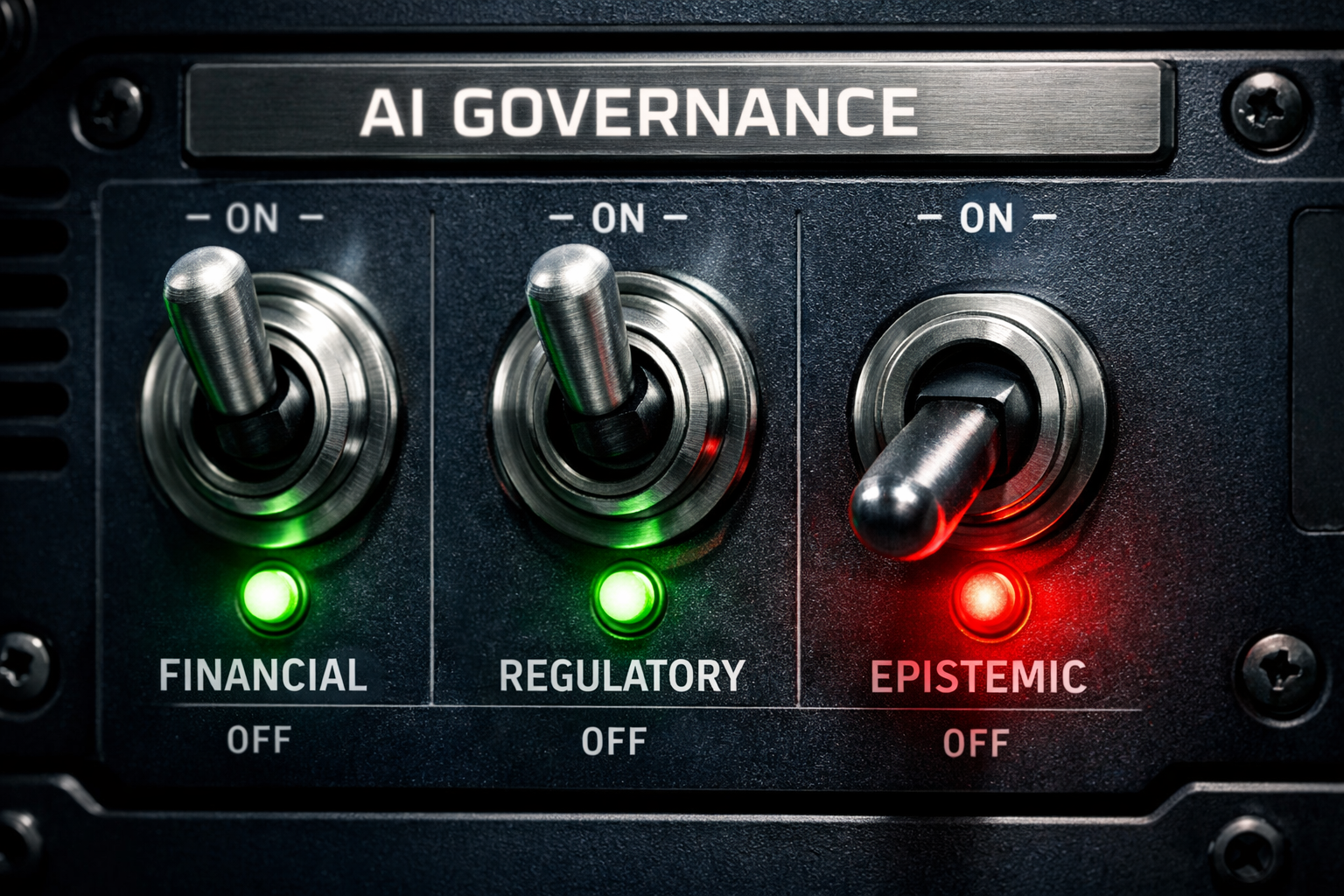
The circuit breaker protocol
𝗖𝗼𝗻𝗰𝗹𝘂𝘀𝗶𝗼𝗻: 𝗚𝗼𝘃𝗲𝗿𝗻𝗮𝗻𝗰𝗲 𝗶𝘀 𝘁𝗵𝗲 𝗣𝗿𝗲𝗿𝗲𝗾𝘂𝗶𝘀𝗶𝘁𝗲
The path to a 50% growth target through Agentic BI is not found in a larger context window or a more expensive LLM license. It is found in the unsexy, rigorous work of data governance and semantic modeling.
We must stop building "Gates" that slow down innovation and start building "Guardrails" that allow AI to run fast. The organizations that internalize this, treating their data estate as a governed product rather than a passive repository, will be the ones that actually realize the ROI of the AI revolution.
